

“Fireproof” research: Materials that don't mind the heat
Dübendorf, St. Gallen and Thun, 26.03.2026 — Flame-retardant materials are essential wherever large numbers of people gather. Empa develops such materials for a wide range of applications. Empa researcher and materials expert Sabyasachi Gaan explains the hurdles that need to be overcome in this field.
When do we refer to materials as flame-retardant, and when as fireproof?
The terms “flame-retardant” and “fireproof” are often confused, but they have very different meanings. Flame-retardant materials are technically flammable, but difficult to ignite. This slows down the spread of fires and allows more time for people to evacuate and for the firefighters to arrive. Flame-retardant materials are mostly organic. Some of them are inherently flame-retardant, while others have to be modified, for example, through additives, impregnations, or coatings. Fireproof materials are usually inorganic, such as stone, cement, metals, ceramics, and glass. They are considered non-combustible and offer excellent protection against fire.
Where are flame-retardant materials required?
Fire protection is required wherever people gather in public places and there is a risk of fire: in office buildings, theaters, stadiums, hospitals, and the like. Not only should the building itself be flame-retardant, but so should the furniture and interior fittings. Flame-retardant materials are also in demand in transportation and industry. Furthermore, protective clothing for firefighters, police, military, and certain industrial sectors must be flame-retardant.
What kind of materials for fire safety do you develop at Empa?
In my research team, we focus on organic materials. We have already developed coatings for wood and additives for wood-based composites. Another focus is on flame-retardant polymers, such as polyurethane foams, polyester fibers, and epoxy resin. These are used in a wide variety of applications, including construction, transportation, and furnishings. Other research groups at Empa are working on further flame-retardant wood-based materials and on non-combustible inorganic materials. To support firefighters and other emergency services, research is also being conducted on protective clothing and the heat-resistant FireDrone.
What are the challenges involved in developing flame-retardant materials?
There are technical, economic, and environmental challenges. Regardless of fire protection, any new material must be able to fulfill the purpose for which it is intended. When you make a material flame-retardant, you always change other properties as well. It can happen that you improve the fire behavior, but worsen the weather resistance or stiffness, for example – or make the material more difficult to process.
Then, the new material should be non-toxic to humans and the environment. The manufacturing process should also have as little environmental impact as possible, for example by avoiding the use of certain solvents. And finally, the whole thing must of course be economical, so it must not cost too much. When developing flame-retardant materials, we must balance these three factors. To find the best solution, we need to understand and factor in the exact application of the material.
"Cool" projects
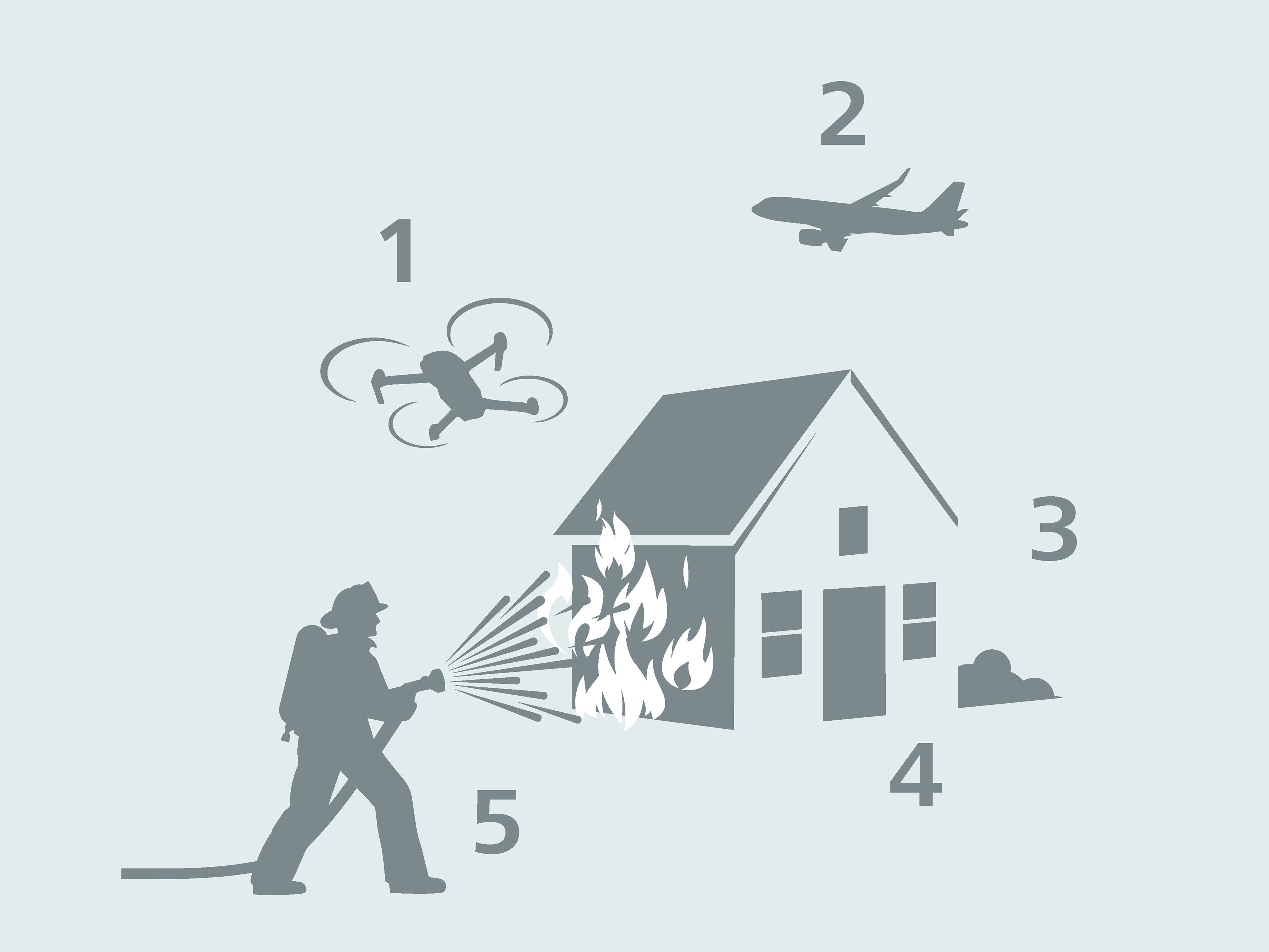
Researchers at Empa are developing the FireDrone (1), which can withstand extreme heat, recyclable composites for airplanes and trains (2), flame-retardant wood-based materials made using melon enzymes (3), lightweight, fire-resistant sound absorbers (4) and protective clothing for firefighters (5).
1. A drone that can withstand extreme heat

Firefighters and industrial inspectors often have to work under extreme conditions – whether to assess hazards, locate victims or inspect infrastructure. The FireDrone is the first drone designed to deliver real-time data from high-risk areas, even in extreme temperatures that are too dangerous for humans and conventional drones. Developed at Empa and now continued by a spin-off, the new generation of drones combines heat-resistant polyimide aerogel insulation with practical robotics.
2. Recyclable composite materials for trains and airplanes
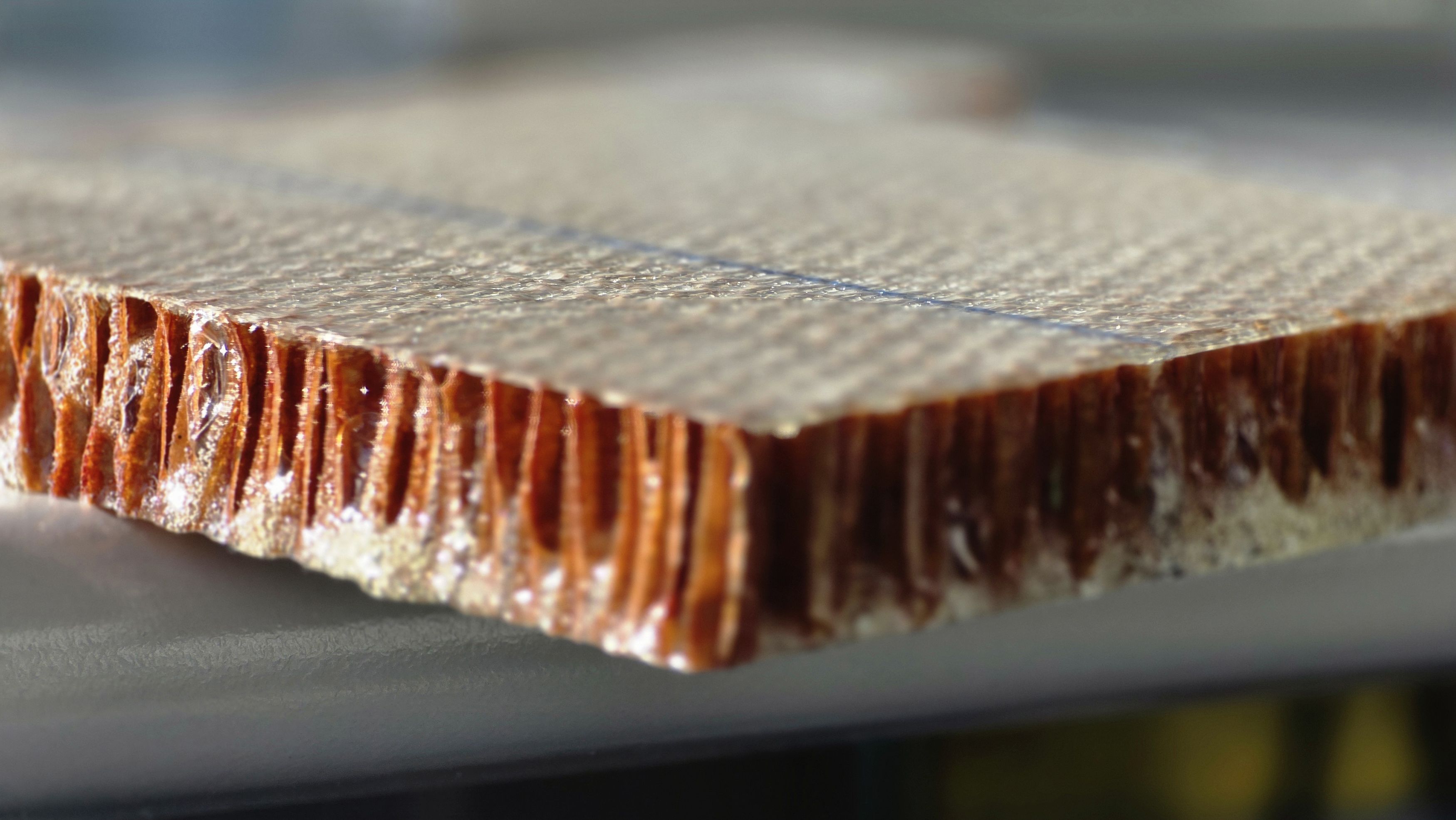
Planes and passenger trains are subject to strict fire safety requirements – and at the same time must be mechanically robust and as light as possible. Glass and carbon fiber-reinforced composites meet these requirements, but until now have been virtually impossible to recycle. Researchers at Empa have succeeded in producing a new type of epoxy resin that is both flame-retardant and recyclable. In an Innosuisse project with the Swiss company Elantas, they are now working on commercializing the material.
3. Fire-retardant wood materials thanks to melon enzymes

What usually ends up in the furnace today could protect houses tomorrow. Researchers at Empa and ETH Zurich have found a way to use a crystalline mineral binder to process sawdust into a hybrid material that is more resistant to fire. To achieve a strong connection through controlled crystallization, they used an enzyme from watermelon seeds. The new building material is thus not only robust and flame-retardant, but also recyclable.
4. Thin and fireproof sound absorbers
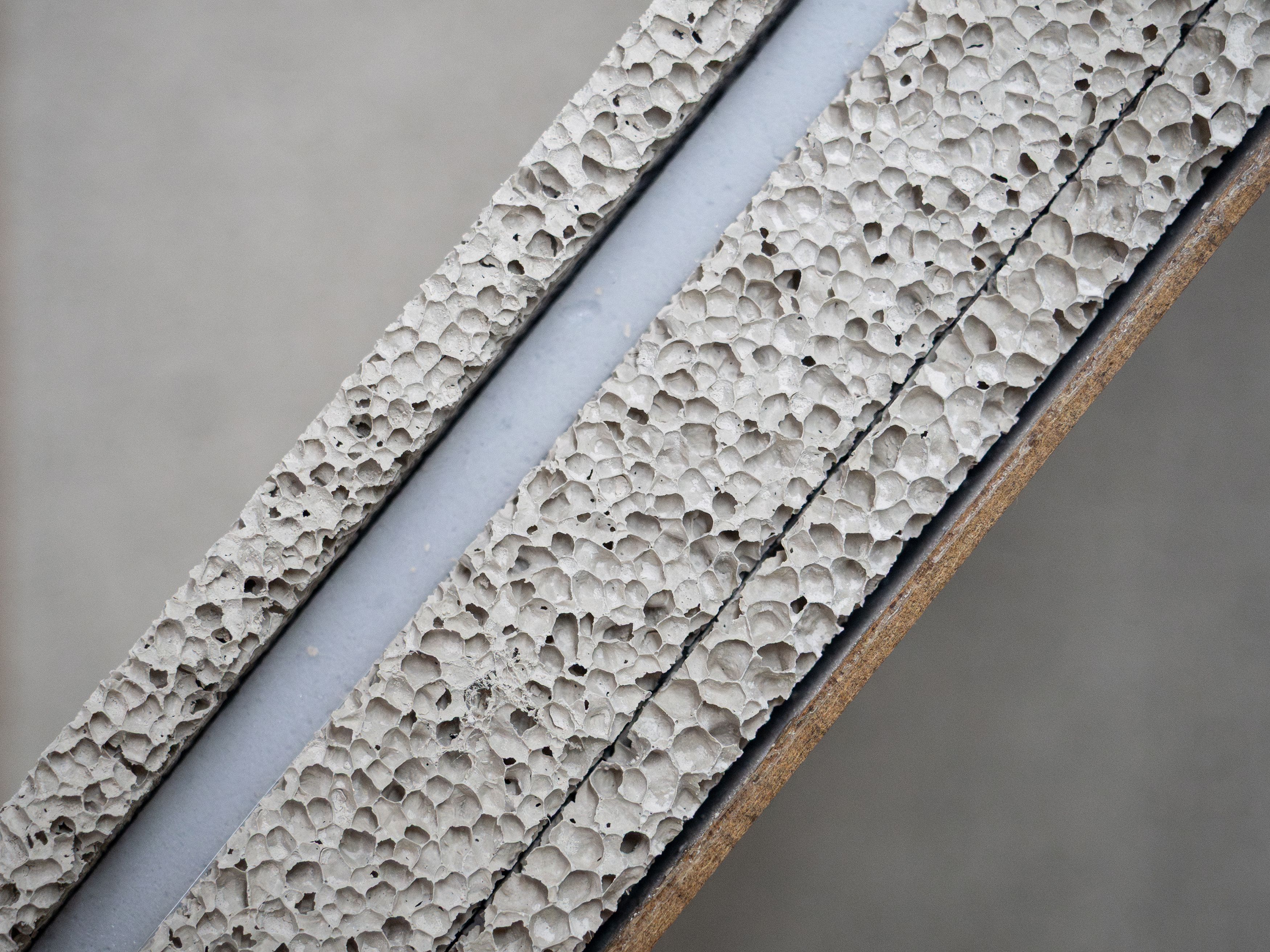
Thin, tailor-made, and non-combustible: Empa researchers have teamed up with the company de Cavis to develop innovative sound absorbers made from mineral foams. Not only are they significantly thinner than conventional materials, they can also be designed specifically for different frequency ranges. Since they are made almost entirely of gypsum or cement, they are non-combustible and do not release any toxic gases or harmful particles.
5. Protective clothing for first responders
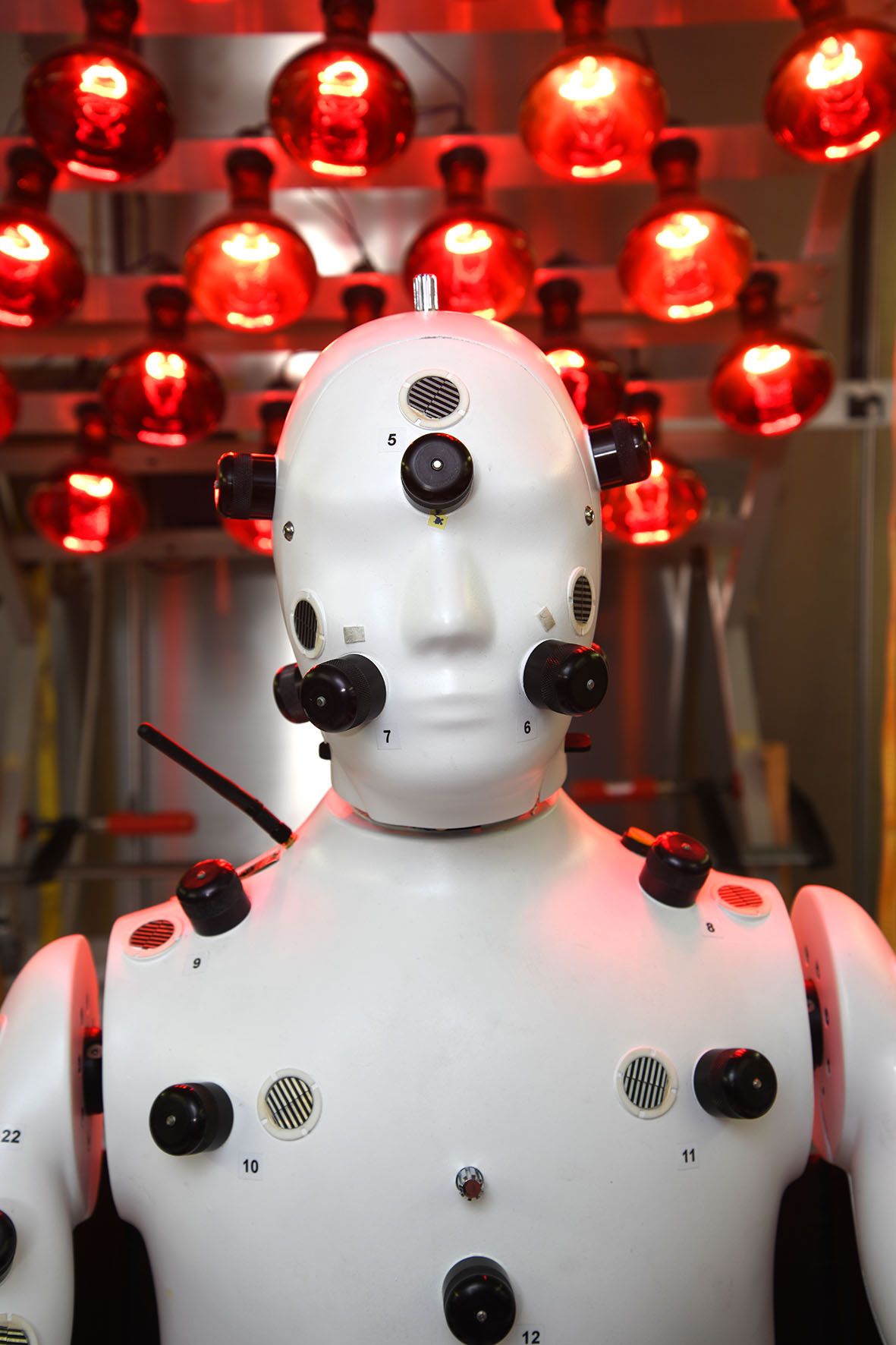
Firefighters must be able to work effectively in dangerous environments. Empa researchers are working to reduce the impact caused by external heat radiation and steam development inside protective clothing. Smart dummies and digital twins are important “research partners” in this endeavor. In addition to insulating and thermo-reflective textiles, integrated early warning systems are being developed that provide real-time information about exposure and allow personalized predictions of how long rescue workers can remain in the danger zone.
Further information
Dr. Sabyasachi Gaan
Empa, Advanced Fibers
Phone +41 58 765 76 11
sabyasachi.gaan@empa.ch