

Technologies for the energy transition
Villigen, 15.10.2026 — The future begins in the laboratory. Researchers at the Paul Scherrer Institute PSI are working on technologies to accelerate the energy transition, with a view to reconciling climate protection with security of supply. PSI is using science and innovation to meet one of the greatest challenges facing society today.
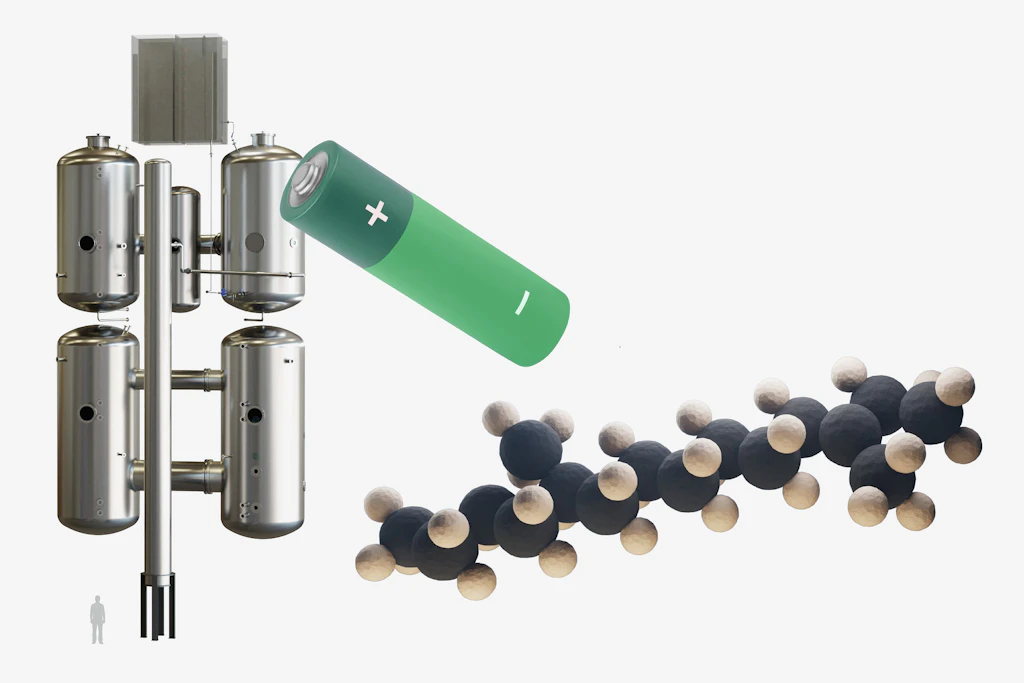
The energy transition is becoming increasingly visible in our everyday lives as rooftop solar panels and electric cars proliferate. The urgent need to curb climate change is now becoming noticeable in Switzerland too: last summer’s heat weighed on people and nature alike and accelerated the melting of glaciers. At the same time, the ban on building new nuclear power stations is coming under discussion in Switzerland.
Reconciling climate protection and security of the energy supply also depends on the technologies that are currently being researched, tested and developed. At PSI, these range from new storage solutions for renewable electricity through synthetic fuels to safer designs for nuclear energy and fusion. Many of these approaches are not only being developed in the laboratory but also driven forward in collaboration with industry, creating innovative demonstration plants that pave the way for their practical implementation.
Batteries for the night, chemical storage for the winter
A key problem with renewable energy is that the electricity generated using solar and wind power is not always available when it is needed. Batteries can bridge this gap in the short term. Sarbajit Banerjee and his team at the PSI Center for Energy and Environmental Sciences are studying new types of batteries that deliver high performance whilst at the same time relying on raw materials that are more readily available and more sustainable – such as materials extracted from industrial waste or mineral-rich thermal springs. They are using PSI’s large research facilities to investigate the ageing of battery materials and how to avoid defects.
When it comes to seasonal energy storage, however, chemical energy carriers come into their own. Petrol, diesel and kerosene all take millions of years to form within the Earth and have a high energy density. Researchers at PSI are working on climate-friendly alternatives that can be produced much more quickly. They have developed a process known as catalytic hydrothermal gasification for producing hydrogen or methane from biomass and organic waste. “We do this in much the same way as the Earth does – only much faster,” says David Baudouin from the PSI Center for Energy and Environmental Sciences.
Hydrogen can also be produced from electricity by means of electrolysis – an advantage particularly during periods of high electricity generation. Emiliana Fabbri’s research group at the PSI Center for Energy and Environmental Sciences is developing new membranes for this purpose using materials that are more environmentally friendly, cheaper and more readily available.
SAF for more sustainable aviation
Not every sector can be fully electrified – batteries are too heavy for mainstream aviation. That is why PSI is working with the Zurich-based company Metafuels to develop a synthetic, climate-friendly fuel. Since August 2026, their process has been undergoing testing under real-world conditions at the new Aerobrew demonstration plant on the PSI campus. “This allows us to further optimise our patented technology and lay the groundwork for industrial production,” says Marco Ranocchiari, a researcher at the PSI Center for Energy and Environmental Sciences.
Nuclear research focusing on safety and waste reduction
PSI also carries out nuclear research, focusing primarily on safety, waste reduction and new technologies for a reliable, carbon-free supply of electricity and heat. Andreas Pautz, Head of the PSI Center for Nuclear Engineering and Sciences, sees this technology as having the potential to remain part of Switzerland’s climate-friendly energy mix in the long term. At PSI’s PANDA research facility, researchers are testing passive cooling systems that operate without pumps or an external power supply, making them safer. In addition, PSI is conducting research into molten salt reactors, which can even utilise spent nuclear fuel and thereby reduce the amount of nuclear waste that has accumulated to date.
Looking even further into the future, fusion presents significant technological challenges as well. PSI researchers are contributing their expertise in the field of additive manufacturing here, among other things, with a view to combining specific materials to withstand the extreme conditions that exist in fusion reactors. PSI is also working with the company Proxima Fusion to develop high-performance superconducting magnets capable of controlling the plasma in a fusion reactor, which reaches temperatures of several million degrees.
Text: Paul Scherrer Institute PSI/Laura Hennemann
About PSI
The Paul Scherrer Institute PSI is the largest research institute for natural and engineering sciences in Switzerland. It is the central location of Switzerland’s large research facilities, available to both the scientific community and industry. Its research spans future technologies, energy and climate, health innovation and fundamentals of nature. The annual budget is CHF 450 million. PSI employs 2300 people; around a quarter of these are postdoctoral researchers, PhD students or apprentices. PSI is part of the ETH Domain, which also includes ETH Zurich and ETH Lausanne, as well as the other federal research institutes Empa, Eawag and WSL.